
ZADANIE 2 · TRENING
Describe the picture
ETAP 1 / 9
Zaczynamy od The picture shows...
Najpierw powiedz ogólnie, co przedstawia zdjęcie.
PRZYKŁAD 1
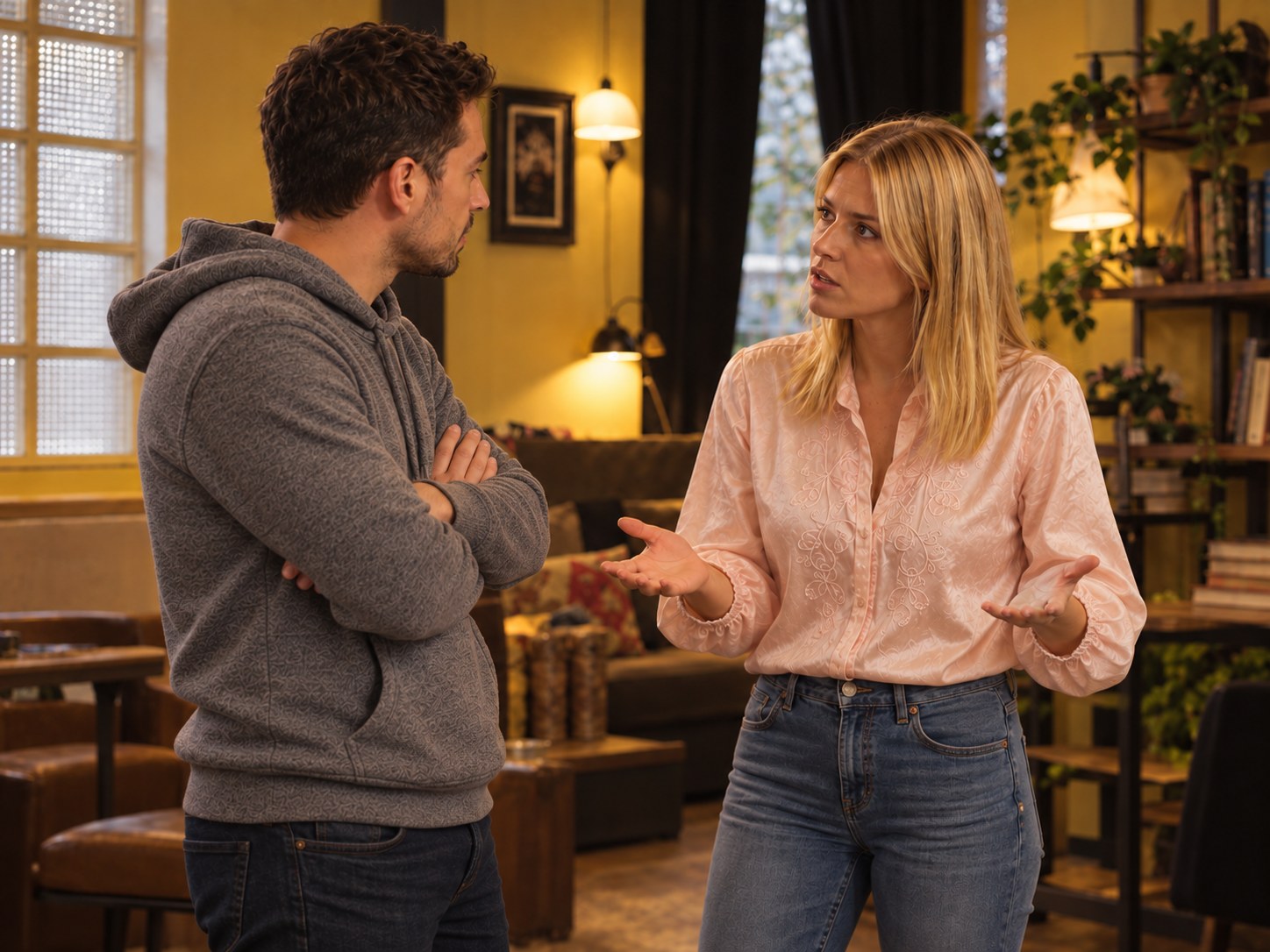
The picture shows a man and a woman.
PRZYKŁAD 2
The picture shows a man and a woman in a living room.
PRZYKŁAD 3
The picture shows a man and a woman having an argument.
Twoje zadanie: wybierz poprawne dokończenie zdania The picture shows.... Po każdej odpowiedzi automatycznie pojawi się kolejna runda.
ETAP 2 / 9
Where? - gdzie znajdują się osoby i przedmioty?
Najpierw uporządkuj zdjęcie przestrzennie, a potem połącz określenia miejsca z there is i there are.
on the left
on the right
in the foreground
in the background
Spójrz na przykłady: po określeniu miejsca używamy there is dla jednej osoby lub rzeczy i there are dla liczby mnogiej.
On the left, there is a big window.
On the right, there are some shelves with books and plants.
In the foreground, there are two people.
In the background, there is a lamp on the wall.
Ważne: używamy there is dla jednej osoby lub rzeczy i there are dla liczby mnogiej.
Twoje zadanie: przeciągnij każdą etykietę na odpowiednią część zdjęcia. Na telefonie możesz też stuknąć etykietę, a następnie wybrane miejsce na fotografii.
Twoje zadanie: wybierz poprawną konstrukcję there is albo there are po podanym określeniu miejsca.
ETAP 3 / 9
What are they doing? - Present Continuous
Teraz opisz czynności widoczne na zdjęciu. Pamiętaj o schemacie am / is / are + czasownik-ing.
1
2
3
4
1 · The man is standing with his arms crossed.
2 · He is looking at the woman.
3 · The woman is talking to the man.
4 · She is gesturing with her hands.
Present Continuous: osoba + am/is/are + czasownik z końcówką -ing.
Twoje zadanie: wybierz zdanie poprawnie utworzone w Present Continuous. Zwróć uwagę na formę to be i końcówkę -ing.
ETAP 4 / 9
Clothes
Na tym etapie skupiamy się tylko na ubraniach osób widocznych na zdjęciu.
MAN
The man is wearing a grey hoodie and dark jeans.
WOMAN
The woman is wearing a pink blouse and blue jeans.
GENERAL
They are wearing casual clothes.
Ubrania: przy opisie tego, co ktoś ma na sobie na zdjęciu, używamy konstrukcji am/is/are wearing.
Twoje zadanie: wybierz poprawne zdanie o ubraniach. Zwróć uwagę na konstrukcję is wearing / are wearing.
ETAP 5 / 9
Speculation & atmosphere
Na końcu przechodzimy od faktów do ostrożnych przypuszczeń. Używamy may be i seem.
They may be a couple.
They may be arguing about something important.
The woman seems angry.
The man seems to be annoyed.
Twoje zadanie: wybierz poprawną formę po may lub seem. Zwróć uwagę, jak budujemy przypuszczenia i opisujemy atmosferę.
ETAP 6 / 9
Sort the sentences
Przyporządkuj każde zdanie do właściwej części opisu.
Twoje zadanie: na ekranie pojawia się jedno zdanie. Kliknij kafelek, do którego pasuje dany fragment wypowiedzi. Po poprawnej odpowiedzi pojawi się kolejne zdanie.
Zdanie 1 z 180% ukończone
ETAP 7 / 9 · TRENING Z PODPOWIEDZIAMI
Opis krok po kroku
Najpierw wysłuchaj instrukcji. Po kliknięciu Start przejdziesz do sześciu krótkich pytań pomocniczych.

00:15
1 / 6
What does the picture show?
ETAP 8 / 9 · JAK NA PRAWDZIWYM EGZAMINIE
Samodzielny opis + trzy pytania
Najpierw wysłuchaj polskiej instrukcji. Po kliknięciu Start egzaminator rozpocznie zadanie po angielsku.
02:00

The picture shows a man and a woman having an argument. On the left, there is a big window. On the right, there are some shelves with books and plants. In the foreground, there are two people. In the background, there is a lamp on the wall. The man is standing with his arms crossed, and he is looking at the woman. The woman is talking to him, and she is gesturing with her hands. The man is wearing a grey hoodie and dark jeans. The woman is wearing a pink blouse and blue jeans. They are wearing casual clothes. The woman seems angry, and the man seems to be annoyed. They may be a couple, and they may be arguing about something important.
ETAP 9 / 9 · FINALNA SYMULACJA
Final simulation
Pełny model: egzaminator → Olivia → trzy pytania → trzy odpowiedzi.